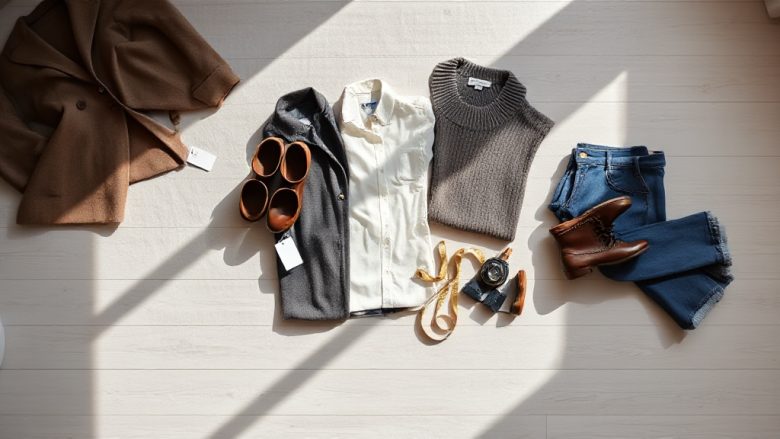
Budget fashion gets a bad reputation. Say the words out loud and most people picture thin cotton, loose threads and a jumper that pills after two washes. That’s not budgeting. That’s just buying badly at a low price. This complete guide to budget fashion in the UK is built on a different idea: that spending less and owning better are not opposites. They’re the same skill, practised in a particular order.
I’ve spent years getting this wrong before getting it mostly right. The turning point wasn’t a pay rise. It was a wardrobe clear-out where I counted eleven items I’d worn once and four pairs of jeans that had split at the same seam. Once you see the pattern, you can’t unsee it. So here’s the strategy, from mindset to sourcing to the seasonal calendar that actually saves money.
Why Budget Fashion Is a Strategy, Not a Sacrifice
The average UK shopper doesn’t have a clothing problem. They have a planning problem. Fast fashion made it easy to buy on impulse, and impulse buying is expensive precisely because it feels cheap at the moment of purchase. A ten-pound top that lasts three wears costs more per wear than a forty-pound top that lasts two years. That maths is simple, and it’s the whole foundation of budget dressing.
The mindset shift is this: stop asking what something costs today and start asking what it costs per wear. A coat you wear 120 times across three winters is a bargain at almost any reasonable price. A novelty dress for one party is expensive even at a tenner. Once you start thinking in cost per wear, the whole high street looks different — and so does your bank statement.
Budget fashion in the UK also means accepting a slower pace. Sales cycles, charity shops and online resale all reward patience. If you can wait three weeks for a winter coat instead of buying it in a panic on the first cold morning, you’ll usually pay less for something better. That’s not deprivation. It’s leverage.
Where to Shop for Affordable Clothes in the UK
There’s no single best shop. There’s a best route for each type of item, and knowing which is which saves more than any discount code.
For basics — plain tees, socks, underwear, simple knitwear — the large value chains and supermarket clothing ranges are genuinely hard to beat on price. The quality is variable, so buy one item first and test it before committing to five. Look at the seams, the fabric weight and how the hem is finished. If a basic survives five washes without losing shape, buy more in the same style.
For outerwear, tailoring and anything structured, charity shops in affluent areas and online resale platforms are where the real value sits. A wool coat that retailed at two hundred pounds often appears second-hand for thirty or forty, and wool doesn’t degrade the way cheap synthetics do. Check the label for fibre content before anything else. A coat that’s eighty per cent wool will outlast three polyester ones.
Outlet villages and end-of-season clearance work well for shoes and bags, but only if you go with a specific gap in mind. Wandering an outlet without a list is how people spend eighty pounds on nothing useful. Resale apps have also matured to the point where you can filter by brand, size and condition, which turns a chaotic charity-shop rummage into something closer to a targeted search.
One rule I’ve kept: never pay full price for something you can wait for. Almost everything in fashion goes on sale eventually. The exceptions are genuinely scarce items, and if it’s scarce it’s probably not a budget purchase anyway.
How to Judge Quality Before You Buy
Quality checking is a learnable skill, and it takes about ninety seconds per garment once you know what to look for.
Start with the fabric. Natural fibres — cotton, wool, linen, silk — generally age better than synthetics, though blends have their place. A bit of elastane in jeans helps them hold shape. A hundred per cent acrylic jumper will pill and stretch. Turn the garment inside out and read the care label. If it says dry clean only and you know you won’t, walk away.
Next, the seams. Pull gently along a seam. If you can see daylight through the stitching or the threads look sparse, it won’t survive regular wear. Look at how the hem is finished: a clean, even stitch is a good sign, a wavy or glued hem is not.
Then check the details that reveal cost-cutting. Buttons should feel solid and be sewn on with more than two passes of thread. Zips should run smoothly without catching. Linings should be attached properly, not hanging loose at the shoulders. Pattern matching at the seams — where stripes or checks line up — is a strong signal of care, and you’ll rarely find it on the cheapest garments.
Finally, try things on properly. Sit down, raise your arms, check the length in the mirror. A garment that fits well gets worn constantly. One that almost fits gets worn twice and then lives at the back of the wardrobe. Fit is the single biggest factor in cost per wear.
Building a Small Wardrobe That Lasts
The goal isn’t a capsule wardrobe of thirty identical grey items. It’s a wardrobe where everything gets worn, and where the pieces talk to each other.
Start by counting what you actually wear. For two weeks, note every item you put on. Most people find they rotate through roughly twenty per cent of their clothes. Those are the shapes, colours and fabrics that suit your real life. Build around them.
A workable base for most UK climates looks something like this: two or three pairs of well-fitting trousers or jeans, four or five tops that layer, one or two knitwear pieces, a mid-layer like a shirt or overshirt, a warm coat, a lighter jacket, and shoes for both dry and wet days. That’s not a lot, but it covers the vast majority of British weather and social situations.
Colour discipline helps more than people expect. Pick two or three base colours and one accent, then buy within that palette. Everything matches, which means fewer items do more work. It also makes shopping faster, because you can dismiss most of the rail at a glance.
Repair before you replace. A tailor can take in a waist, shorten a hem or replace a zip for a fraction of the cost of a new garment. Learning to sew a button and darn a small hole takes an evening and saves a surprising amount over a few years. Shoes benefit enormously from a decent polish and occasional resoling.
A Seasonal Calendar for UK Bargain Hunters
Timing is where budget fashion in the UK rewards the patient most. Sales follow a predictable rhythm once you know it.
January is the deepest discount period of the year, especially for winter coats, knitwear and boots. If you can hold out, buy next winter’s coat in the first two weeks of January. February and March are quiet, but that’s when end-of-season stock lingers and shops are keen to clear it.
April and May bring spring clearances, which is the moment to buy lightweight jackets and transitional layers. Summer sales peak in late June and July, and this is when to pick up sandals, linen and holiday clothing for the following year rather than the current one. August is often overlooked, but it’s a good month for basics as shops reset for autumn.
September and October are the worst months to buy full-price winter clothing, because demand is highest and discounts are thinnest. If you must buy then, focus on mid-layers rather than outerwear and wait for the coat. Black Friday in late November offers genuine reductions on some items, but the discounts are often deepest on stock that didn’t sell — which tells you something about it. Boxing Day and the days after Christmas overlap with January sales and are worth checking for anything you missed.
The wider point is that a calendar beats willpower. If you know coats are cheapest in January, you can plan for it instead of improvising in October.
Common Budget Fashion Mistakes to Avoid
Buying too much at once is the classic error. A big cheap haul feels like a win and usually ends with half of it unworn. Buy one or two pieces at a time, wear them, and see how they hold up before adding more.
Chasing every sale is another. A discount on something you don’t need is still money spent. The question isn’t whether it’s reduced; it’s whether it fills a real gap in your wardrobe.
Ignoring fit to save money backfires too. A cheap garment that needs altering often costs more than a slightly pricier one that fits off the rail. And buying for a fantasy version of your life — the hiking gear for a hobby you don’t have, the formal dress for events you don’t attend — is one of the most common ways wardrobes fill up with waste.
Finally, don’t confuse price with value. Some cheap things are excellent. Some expensive things are poorly made. The label and the price tag tell you very little. The fabric, the seams and the fit tell you almost everything.
Frequently Asked Questions
Is it really possible to dress well on a small budget in the UK?
Yes, and the key is planning rather than luck. Focus on fit, fabric and cost per wear, shop sales and resale with a specific list, and buy fewer items that last longer. A small, well-chosen wardrobe usually looks better than a large, random one.
Which UK shops are best for cheap but decent quality clothing?
There’s no single answer, because different shops are strong in different categories. Value chains and supermarket ranges work well for basics, charity shops and resale platforms excel for outerwear and tailoring, and outlets are best for shoes and accessories when you go with a clear plan.
When are the best times of year to buy clothes cheaply in the UK?
January is the strongest month overall, particularly for winter clothing. Late June and July are best for summer items, and April and May for spring layers. September and October are the worst times to buy full-price winter wear, so plan ahead where you can.
How do I tell if a cheap garment will actually last?
Check the fabric content first, then the seams, buttons, zips and hem finish. Pull gently at the seams and look for sparse stitching. If the details are tidy and the fabric feels substantial, it’s a good sign. Fit matters too, since a well-fitting item gets worn far more often.