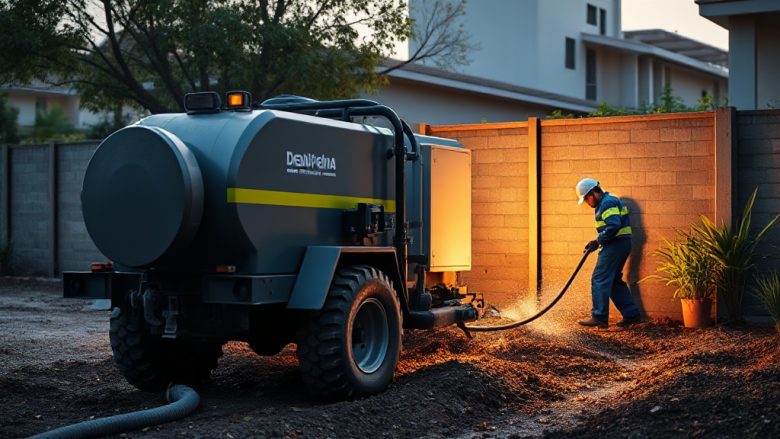
Septic Tank Care for Paraisópolis Properties Off the Sewer Grid
Not every address in Paraisópolis sits on São Paulo’s municipal sewer grid. In the steep, densely built areas where the main line never reached, many homes and small businesses rely on a septic tank or a simple settling system. That means maintenance follows a different rhythm: instead of calling the utility, the property owner becomes responsible for pumping, inspecting and repairing the system. If you are searching for a desentupidora Paraisópolis São Paulo SP, the right provider should understand both conventional clogs and the slower, smellier problems that come with off-grid septic use.
Warning Signs That a Septic System Needs Attention
Septic problems rarely appear overnight. They build up quietly until something backs up or the ground starts to soften. The earlier you notice the signs, the cheaper and less disruptive the fix tends to be.
Slow drains and gurgling fixtures
When every drain in the house slows at the same time, the blockage is usually downstream of the individual sink or shower trap. In a septic property, that points to a full tank or a clogged inlet pipe. Gurgling sounds after flushing are another clue that air is struggling to move through the system.
Odors inside or near the tank
A faint smell after heavy rain can be normal. A persistent rotten-egg odor around the tank lid, the yard, or the bathroom floor drain is not. It often means the tank is overfull, the bacteria balance has collapsed, or a baffle has failed and is letting gas escape the wrong way.
Soft ground or unusually green patches
Liquid leaking from a cracked tank or a saturated drain field shows up as spongy soil, standing gray water, or a patch of grass that stays greener than everything around it. In Paraisópolis’s hillside lots, runoff can hide this for a while, so check the area downhill from the tank after dry weather.
Backups in the lowest fixture
The lowest drain in the building — often a ground-floor shower or a service-area floor drain — is usually the first to back up when the tank is near capacity. If wastewater rises there after normal use, stop adding water to the system and arrange a pump-out before it reaches the living areas.
How Septic Cleaning Actually Works
Pumping a tank is not the same as unclogging a sink. The job involves safe access, proper equipment and a place to take the waste. Understanding the steps helps you ask better questions and avoid paying for work that does not solve the problem.
Locating and opening the tank
Many older Paraisópolis properties have buried or paved-over tank lids. A technician may need to probe, use a drawing, or follow the inlet pipe to find the inspection cover. Once open, the tank is vented briefly before work begins — never stand over an open tank, because the gases inside can be dangerous.
Measuring sludge and scum layers
A proper service measures the three layers inside the tank: the scum floating on top, the clear liquid in the middle, and the sludge settled at the bottom. If the sludge layer is more than about one-third of the tank’s depth, it is time to pump. Skipping this measurement is a common shortcut that leads to premature or unnecessary pumping.
Pumping, rinsing and checking the outlet
The vacuum truck removes the contents, then the technician rinses the walls and checks the inlet and outlet baffles for cracks or blockages. A damaged baffle lets solids escape into the drain field, which is far more expensive to fix than a simple pump-out. Ask for the outlet to be inspected before the lid goes back on.
When the drain field is the real problem
If the tank is pumped but drains still back up, the issue may be in the distribution box or the drain field itself. In tight lots, a desentupidora Paraisópolis team may use hydrojetting to clear grease and roots from the line between the house and the tank, or recommend a camera inspection before any digging begins.
Scheduling Service Without Disrupting the Household
Septic work is disruptive by nature: trucks need access, water must be shut off for a few hours, and the tank has to be reachable. Planning the visit around the household’s routine makes the process far smoother.
Choose a low-water day
Schedule the pump-out for a day when nobody needs long showers, laundry or the dishwasher. A full tank is easier and safer to handle than one that is being refilled while the hose is still inside. If the property has a small business attached, plan around opening hours.
Clear access for the vacuum truck
Narrow streets and steep driveways are common in Paraisópolis. Tell the provider in advance how close a truck can park and how far the hose will need to run. A hose stretched too far loses suction, and a truck that cannot turn around wastes time and may charge extra.
Protect the tank area and warn neighbors
Move vehicles, potted plants and anything fragile away from the lid. Let close neighbors know there may be odors and noise for a couple of hours. In shared courtyards, agree in advance who will be home to open gates and confirm the work.
Book preventive visits before the rainy season
São Paulo’s summer rains raise the water table and put extra pressure on drain fields. A pump-out and inspection in the drier months reduces the chance of a backup during a storm. For properties that host many people, an annual visit is a reasonable baseline; for a single household, every two to three years is often enough — but measure, don’t guess.
What to Expect from the Cost and the Provider
Septic pricing depends on tank size, how full it is, how far the truck must park, and whether the waste needs special handling. A straightforward pump-out for a small residential tank usually costs less than an emergency call that includes unclogging a line or repairing a baffle. Ask for a quote that separates pumping, transport and any extra labor, so you can see what you are paying for.
For urgent backups, a 24-hour desentupidora em Paraisópolis São Paulo SP can often arrive the same day, but emergency rates are higher than scheduled visits. Whenever the system allows it, book ahead. Confirm that the company has a licensed vacuum truck, disposes of waste at an approved site, and will give you a receipt — those details matter more than the lowest headline price.
Finally, keep a simple record: the date of each pump-out, the measured sludge level, and any repairs. That log helps the next technician understand the system quickly and helps you spot a tank that is filling faster than it should. Off-grid septic care is mostly about rhythm and observation, and a property in Paraisópolis that stays on schedule avoids most of the emergencies that make headlines.